
EXPRESSING THE ESSENCE OF CLASSICAL GAMBUH DANCE DRAMA THROUGH BATUAN TRADITIONAL PAINTING
DOI:
https://doi.org/10.59997/ctkr.v6i1.6001Keywords:
Gambuh, Batuan Painting, Character Representation, Balinese Traditional PaintingAbstract
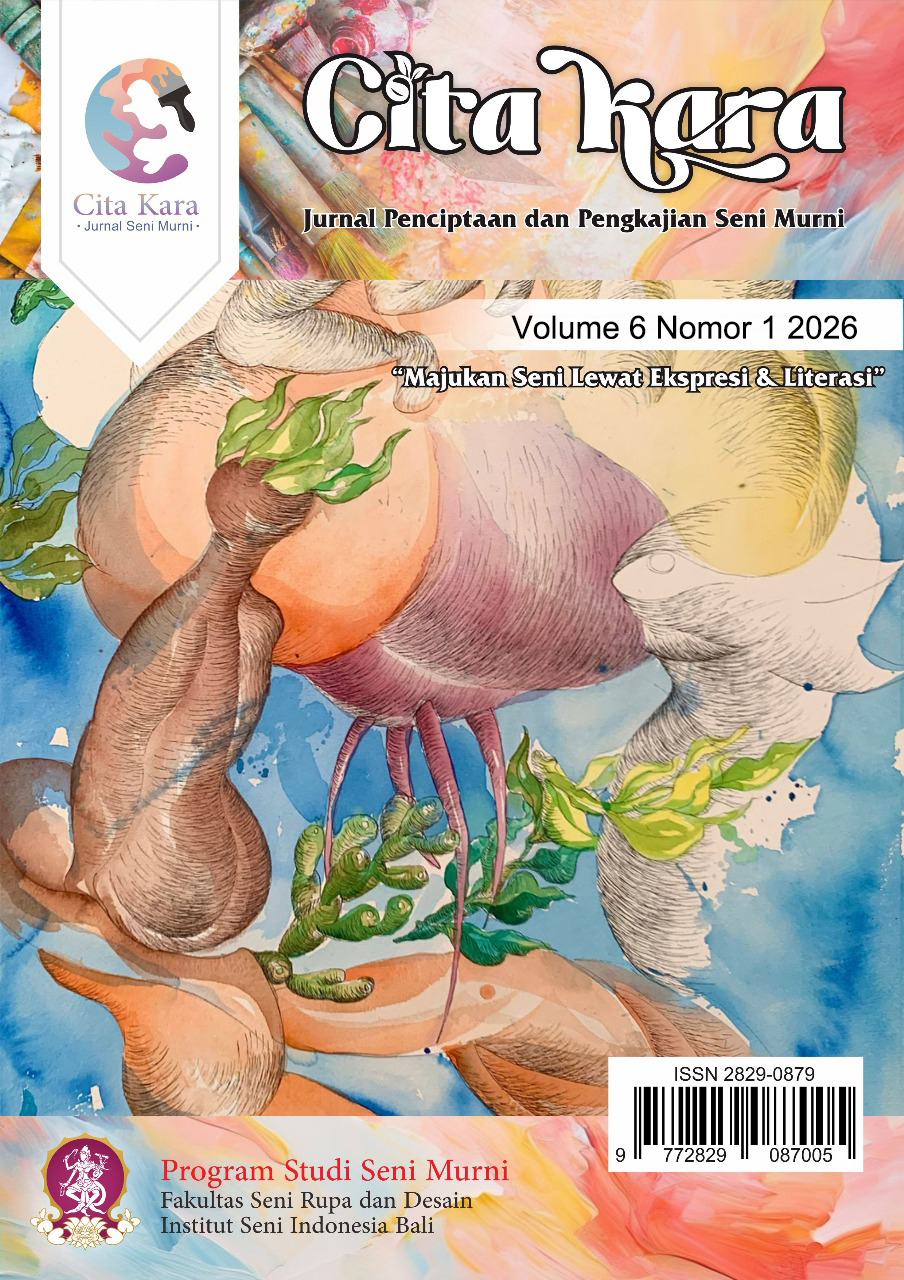
This independent study project explores how the essence of Gambuh, Bali’s oldest and most sacred dance-drama, can be interpreted through the lens of traditional Batuan painting. Motivated by a desire to preserve and reinterpret cultural heritage, this project focuses on visualizing six main characters, Putri Rangkesari, Panji, Condong, Prabhu Lasem, Kade-Kadean, and Arya, each rendered with deep attention to gesture, costume, and symbolic presence. The research employs a method rooted in artistic creation, combining aesthetic approaches such as heuristic, hermeneutic, and symbolic exploration with field observations and traditional mentorship. The creative process followed three key stages: exploration through direct observation of Gambuh performances and Batuan traditional painting studios; improvisation through sketching and experimenting with visual composition; and forming, where the final works were developed using Chinese ink and watercolor on watercolor paper and canvas in the Batuan style. The artworks produced do not merely document the characters but reinterpret them as reflections of emotional and philosophical dimensions relevant to today’s social reality. This project concludes that Batuan painting offers a powerful visual medium to convey the layered narratives of Gambuh, enabling the audience to engage with classical themes of love, power, longing, and moral conflict through a contemplative visual experience.
References
Pojok Seni | Wadah Seni Nusantara, “Gambuh: Teater Tradisional Tertua di Bali, Sumber dari Segala Tari Bali,” Pojokseni.com, 2021. https://www.pojokseni.com/2021/07/gambuh-teater-tradisional-tertua-di.html (accessed Sep. 03, 2025).
A. Vickers, Balinese Art. Tuttle Publishing, 2012.
Widjaja, M, Seni Pertunjukan Bali: Sejarah dan Perkembangannya. 2007.
Indra Wirawan, Gambuh: Teologi, Estetika, dan Filsafat Seni Pertunjukan Bali. 2021.
Kieven, and Lydia, Following the Cap-figure in Majapahit Temple Reliefs: Panji Stories in East Javanese Art and Culture. 2018.
Kontributor proyek Wikimedia, “salah satu tarian di Indonesia,” Wikipedia.org, Feb. 13, 2007. https://id.wikipedia.org/wiki/Gambuh (accessed Sep. 03, 2025).
Gambuh, “La Danza Drammatica Gambuh nella tradizione culturale Balinese” . Universita degli Studi di Bologna, 1987.
Bandem, Fredrik. , and I Made & de Boer, Kaja and Kelod: Balinese Dance in Transition. Oxford University Press., 1995.
ISI Denpasar, “ Seni Lukis Gaya Batuan: Nilai, Fungsi dan Tantangan dalam Perkembangan Seni Rupa Bali.,” 2022.
Additional Files
Published
Issue
Section
License
Copyright (c) 2026 Ashlesha Barde, Ni Made Purnami Utami, I Made Bendi Yudha

This work is licensed under a Creative Commons Attribution 4.0 International License.