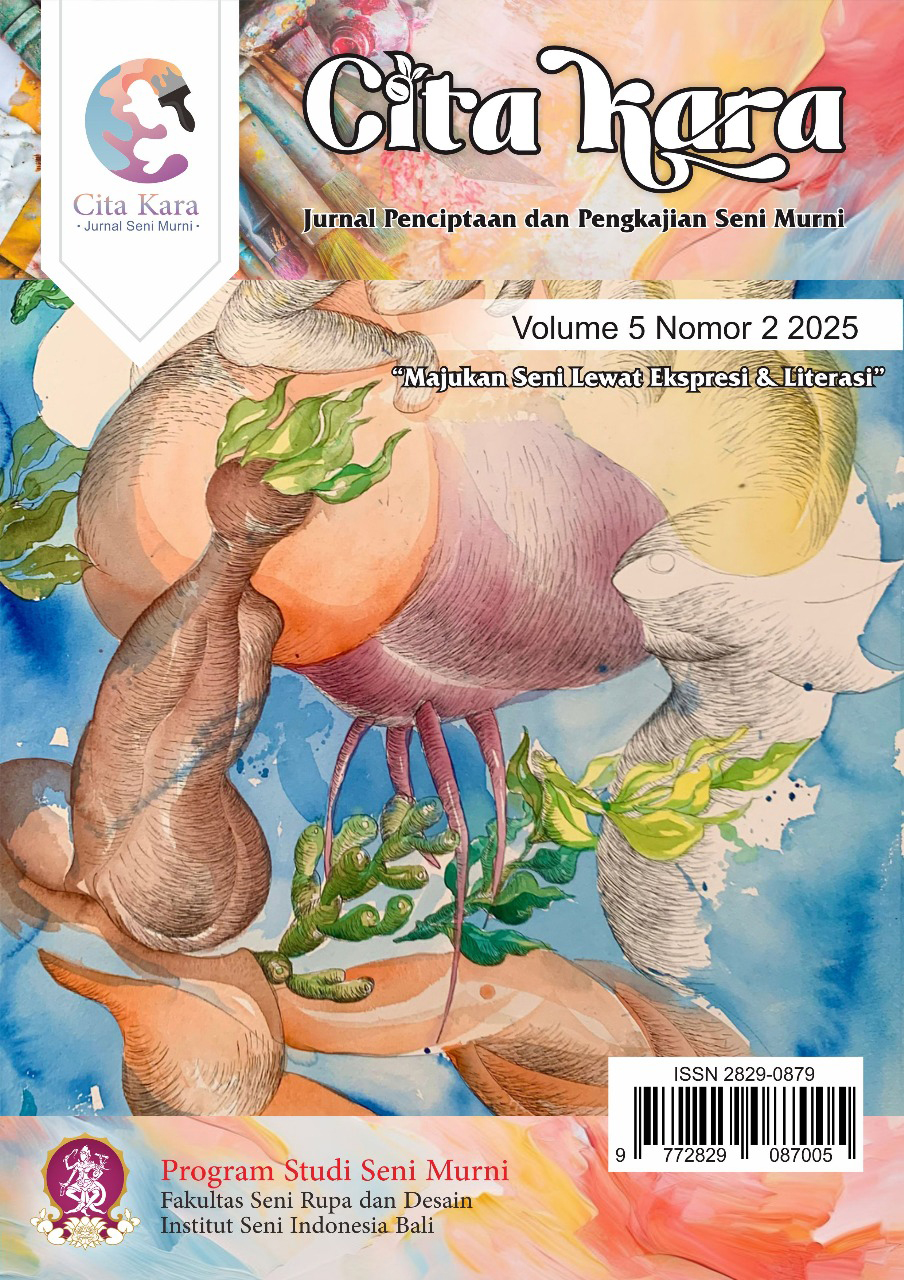
COMBINING DIGITAL PRINTING OF ENDEK MOTIF HIJAB WITH TIE DYE EXPLORATION OF MUSLIMAH FASHION STYLE
DOI:
https://doi.org/10.59997/ctkr.v5i2.4454Keywords:
Hijab, Fashion, Endek, Digital Printing, Tie DyeAbstract
The use of Muslim clothing, especially in using hijab, has become an art trend carried out by a fashion connoisseur. Uniqueness in terms of motifs contained in the hijab can be used as a fashion item that is often used. In this case, the motif used in the hijab is designed using endek motifs with coloring using tie dye techniques that can add aesthetics to clothing and fashion lovers and the public can get to know more about endek motifs, and can preserve the culture that comes from their respective regions. The process of creating this work uses technology that can facilitate the next process, namely by using digital printing technology on the hijab cloth that has been designed through the process of experimentation, exploration, and observation. The use of endek motifs in hijab design emphasizes several motifs in endek woven fabric. The resulting works are 6 (six) hijab works that have been printed using endek motifs and the results with coloring using tie dye coloring techniques which have their own uniqueness with coloring results that can be intentional or unintentional. The final result of this work is expected to encourage the community in preserving and disseminating their culture, can increase the diversity of motif designs on the hijab, especially in traditional motifs, can help in the needs of dressing, especially in Muslim clothing, and can provide a variety of hijab designs, and can give a new impression to the connoisseurs of Muslim fashion.
References
[1] E.Azwar, “Program Pengalaman Lapangan (Magang) Terhadap Kepercayaan Diri Mahasiswa Pendidikan Jasmani Kesehatan dan Rekreasi”, Jurnal Penjaskesrek, vol.6, no.2, 213, Oktober 2019
[2] K.Saharja & S.Aisyah, “Efektifitas Digital Printing (Pencetakan Digital) Dalam Menghasilkan Produk Cetak dan Pengaruhnya Terhadap Konsumen”, Jurnal Politeknik Negeri Media Kreatif, vol.14, no.11, 3432, Juni 2020
[3] I Gede Surya Rahayuda, “Analisis Tektur Pada Pola Motif Kain Endek Menggunakan Metode Klasifikasi KNN (K Nearest Neighbor), Jurnal Internasional Ilmu dan Aplikasi Komputer Tingkat Lanjut, vol.6, no.9, 205, 2015
[4] Heldanita, “Pengembangan Kreativitas Melalui Eksplorasi”, Jurnal Ilmiah Tumbuh Kembang Anak Usia Dini, vol.3, no.1, 58, Maret 2018
[5] Y.Rukiah, K.Susanti, dan F.Saptodewo, “Pelatihan Batik Tie Dye Kepada Kder Dasawisma Sebagai Peningkatan Kreativitas, Jurnal Darma Cendekia, vol.1, no.2, 48, Desember 2022
[6] R.Yudiantara, Damayanti, N.Pamungkas, M.Gufroni, “Sistem Informasi Pengolahan Nilai Rapor Peserta Didik Berbasis Web Secara Multiuser”, Jurnal Teknologi dan Sistem Infomasi, vol.2, no.4, Desember 2021
[7] M.Ahsanulkhaq, “Membentuk Karakter Religius Peserta Didik Melalui Metode Pembiasaan”, Jurnal Prakarsa Paedagogia, vol.2, no.1, 27, Juni 2019
[8] M.Sari, A.Asmendri “Penelitian Kepustakaan (Library Research) dalam Penelitian Pendidikan IPA”, Jurnal Penelitian Bidang IPA dan Pendidikan IPA, vol.6, no.1, 43, 2020
[9] G.Wiguna, W.Munawar, S.H Untung, “Metode Praktik Pada Pmebelajaran Vokasional Otomotif Bagi Peserta Didik Difabel”, Jurnal Pendidikan Teknik Mesin, vol.1, no.2, 262, Desember 2014
Additional Files
Published
Issue
Section
License
Copyright (c) 2025 Naura Taqyna Shafa, I Wayan Adnyana, I Wayan Karja

This work is licensed under a Creative Commons Attribution 4.0 International License.